

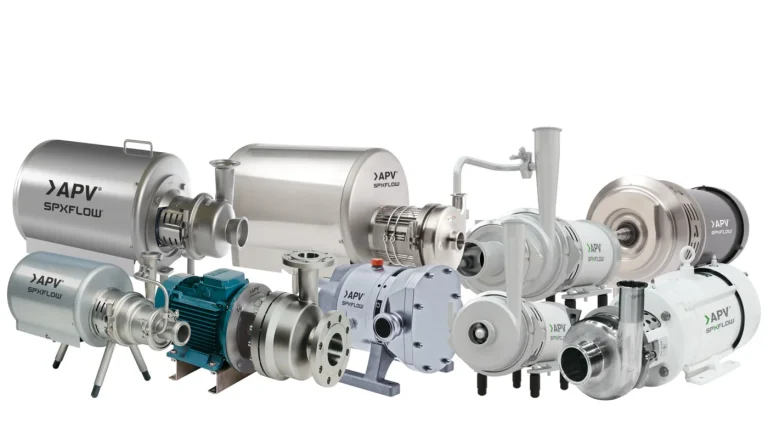
DW rotary lobe pumps
APV's latest rotary lobe pump technology. 26 hygienic models with 3-A and EHEDG certification — up to 30 bar discharge pressure.
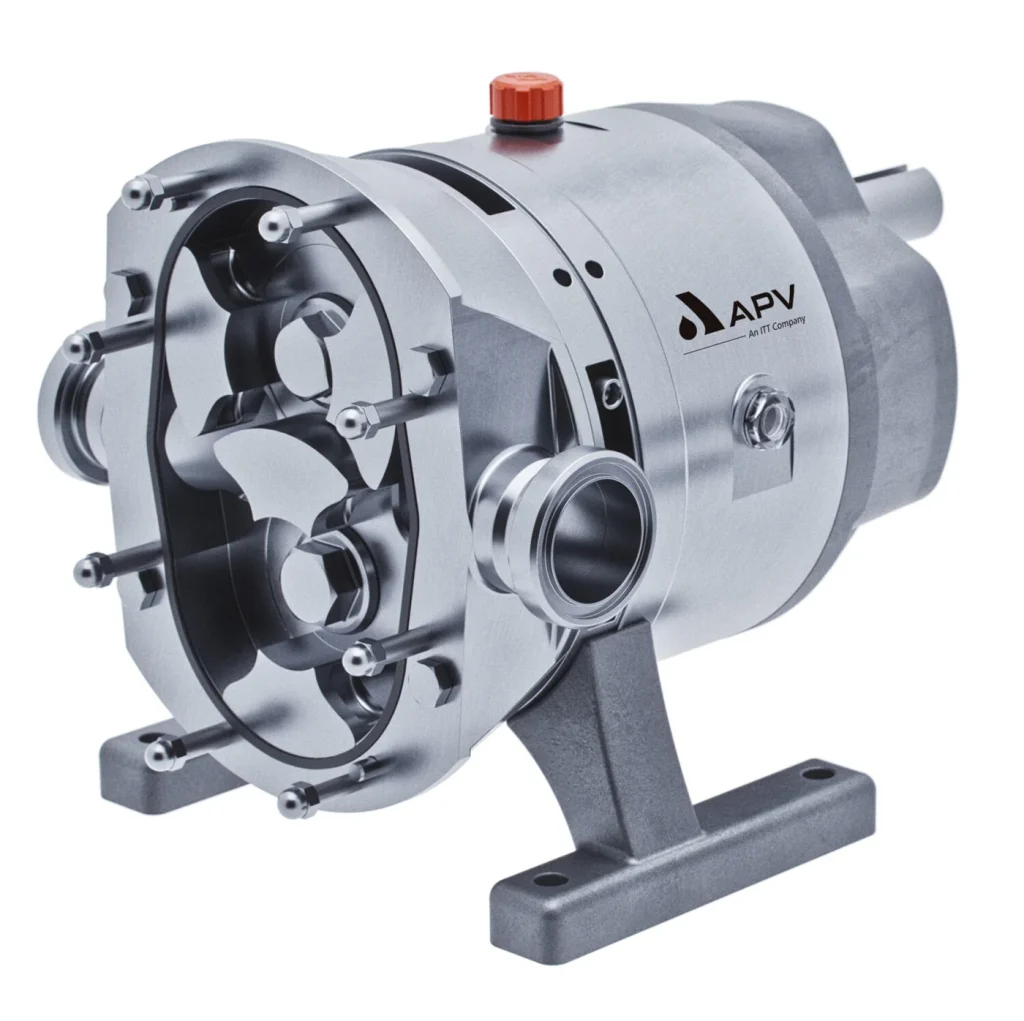 REF · DW
For viscous and delicate media
Piston and twin-lobe rotors handle thin and very viscous media alike — curd, whey, fruit or meat — without special rotors.
- Steady, pulse-free flow for fillers and valves.
- Low NPSHr — well suited to ultrafiltration.
- All product-contact parts in AISI 316L.
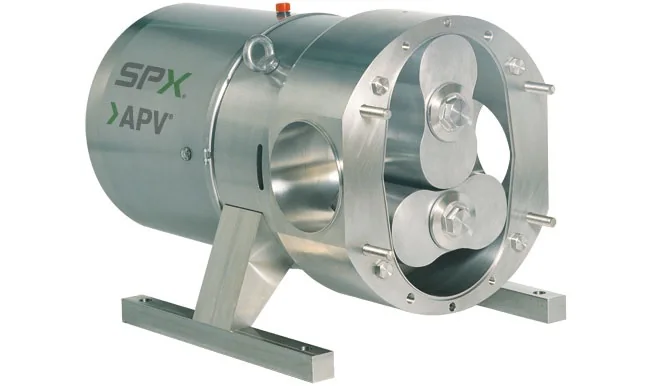
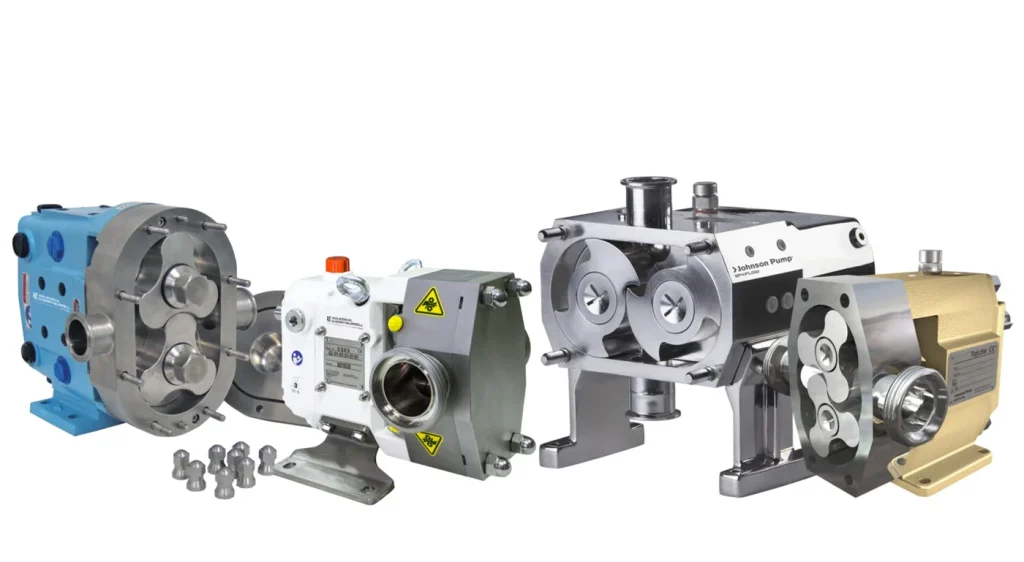
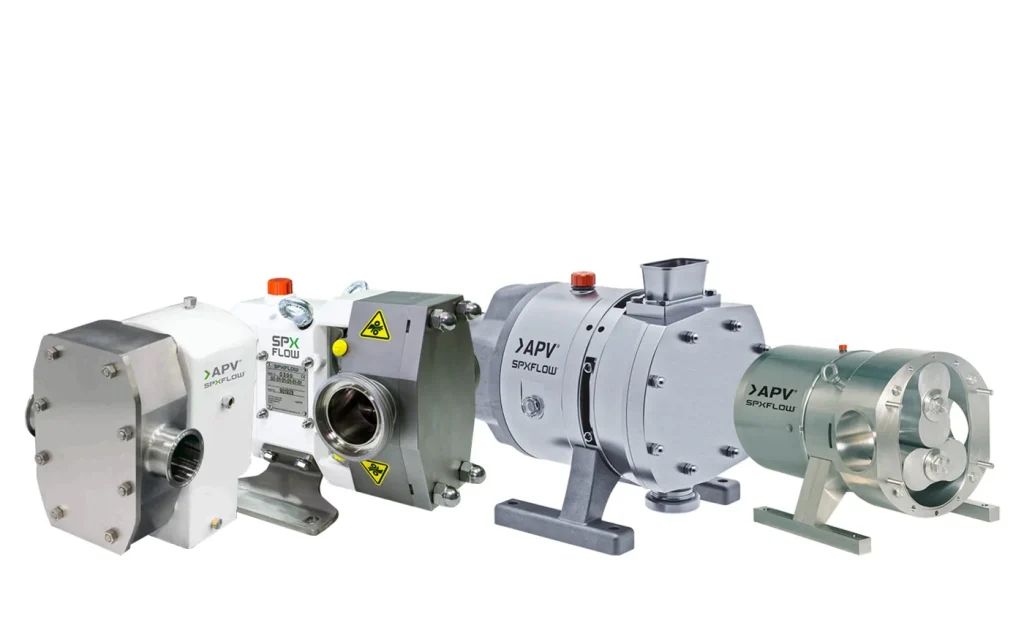
Why DW rotary lobe pumps
High volumetric efficiency
Minimised clearances — a smaller pump does a bigger pump's job.
Ultra hygienic
CIP and SIP, resistant to thermal shock.
Pulse-free operation
Steady flow protects fillers and valves.
Low NPSHr
Better suction — ideal for ultrafiltration.
Gentle on product
Rotor design protects the integrity of sensitive products.
Quick service
Front-loading mechanical seal, identical shaft O-rings.
Specifications
Limits for the whole range. Exact figures for a specific unit are given in the selection sheet.
| Number of models | 26 |
|---|---|
| Capacity | 3 – 1016 l / 100 revolutions |
| Max discharge pressure | 30 bar |
| Product-contact parts | AISI 316L |
| Certificates | 3-A, EHEDG |
| Rotors | piston · twin lobe |
| Cleaning | CIP and SIP |
Where it works
Documentation
Can't find the document you need? We will send it — just ask.
Not sure which model to choose?
Tell us the medium and operating conditions — an engineer will select the unit and send a quotation with a selection sheet.